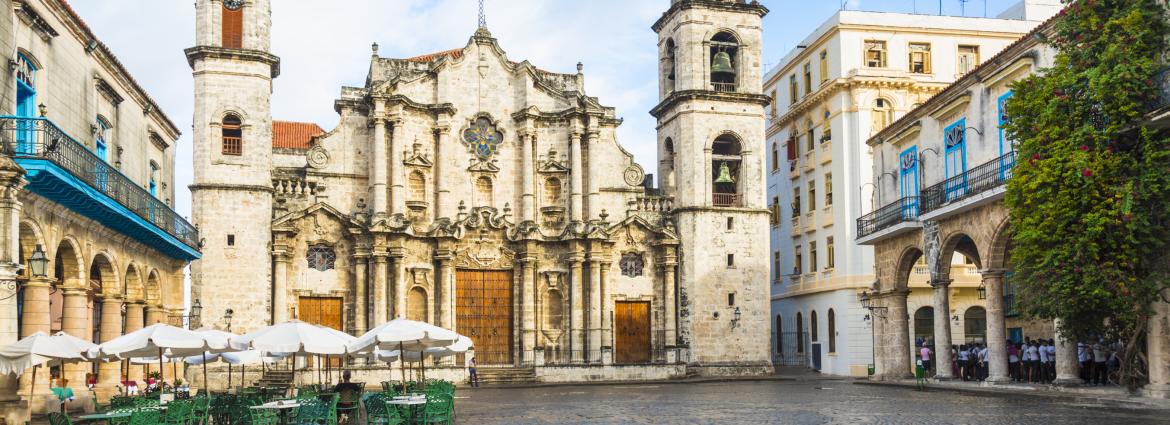
spacer spacer building with bell

faculty

graduate students

instructors

language coordinators

program contacts


spacer
department of romance languages penn logo
hispanic studies

Graduate Students in Hispanic Studies

For more information on the Hispanic Studies Graduate Students please see:
https://sites.sas.upenn.edu/hispanic-studies/people


Esther Alarcón

Transatlantic literature from the 20th and 21th centuries; works that explore issues about identity; exile literature as well as migrations and desplazamientos; avant-garde, dictatorships, and economic migrations and its relationships with globalization.

Home Page
https://sites.sas.upenn.edu/hispanic-studies/people/esther-alarc%C3%B3n


Francisco Ángeles

- Contemporary Latin American Literature.
- Novel of revolution and dictatorship: memory, trauma and mourning.
- Latin American Manifesto.
- Critical and Political Theory: hegemony, populism, postcolonial studies, 21st. century communism, and everyday life politics.
- Internet, new media and globalization.
- Cities and communities in Latin American cinema and visual studies.


Raquel Albarrán

Research and teaching interests:
- Colonial Latin American studies: Mexico, Peru, the Caribbean
- Literary and postcolonial critical theory
- Race and ethnicity
- Visual and material culture
- Theories of space and territoriality
- European and indigenous cartography
- Hispanic Caribbean literatures and cultures


David Barreto

19th to 21st-century Hispanic Poetry and Poetics; History and Theory of the “Lyric”; Transatlantic and Globalization Studies; History and Theory of “Aesthetics”; Baroque and Neo-Baroque Literature; “Modernism” and Modernity; Critical Theory; Spanish Philosophy (María Zambrano, José Luis Pardo, Rafael Sánchez Ferlosio, etc.); Critical Reception of Heidegger in Spain and Latin America.


Derek Beaudry

My research interests include 20th and 21st century Latin American literary and visual arts, with a particular focus on post-revolutionary Mexico; relationships between cultural production and social order/change; the development of discourses of modernity, nation, and the political in Latin America; and continental philosophy and critical theory, more broadly.


Larissa Brewer-García

Sixteenth- and seventeenth-century Andean and Caribbean texts, performances, and historiography; African cultural productions and representations of blackness from the viceroyalites of Peru, New Granada, and early modern Iberia; picaresque and other first-person narrative genres in early modern Spain and Spanish America; translation studies; anthropological discourse and journalistic fiction in contemporary Latin America.


Nelson Cardenas

20th century and contemporary Latin American fiction. Contemporary subjectivities, ethics of the representations of sex and violence. 19th to 21st century Caribbean literatures and cultures. Cuban cultural identity and Cuban diasporas studies. Peninsular and Latin American film and cinematic avant-gardes. Documentaries studies and making.


Sandra Casanova-Vizcaíno

20th and 21st Latin American and Caribbean literature,theatre and performance. Fantastic and Neo-Gothic Aesthetics in Caribbean literature and film. Baroque and Neo-Baroque literature and aesthetics. Horror and violence in Caribbean literature (1900s-1940s). The Artist-novel and Bohemianism in Latin America and the Caribbean. Literary and theatrical representations of the Trujillo Era. Literary genres.


Andrea Cote Botero

Contemporary Latin American Literature; XX and XXI Century Poetry; photography in contemporary narrative; new cultural practices and vanguards (material culture of the text and collective literary projects). Creative Writing Pedagogy.


Steve Dolph

Steve Dolph is currently a first-year doctoral candidate. He is the translator of Juan José Saer’s Glosa, Cicatrices, and La Grande. His research interests include the 20th-century Argentine novel, neobaroque poetics, translation theory, and literatures of migration. He has recently presented papers at Duke University’s One Makes Many, a conference on poetics, and at the Penn Humanities Forum.

Home Page:
https://sites.sas.upenn.edu/hispanic-studies/people/steve-dolph


Diana Eguía

Middle Ages and Early Modern material text; the birth of modern states throughout their written practices; 16th and 17th centuries historical archives both from Spain and Latin America; Francisco de Quevedo; genetic criticism; creation, intertextuality, and reconstruction methods of private libraries in the 16th and 17th centuries; different reading and writing practices throughout the centuries and their consequences in written knowledge; today's recovery of manuscript literary patrimony in Spain and Latin America.


Juan Escourido

Medieval and Early Modern Iberian poetics, Manuscript Studies, Game studies, Leisure Studies, Critical and Cultural Theory, Cibertextuality and Strategic Studies. Currently I am working on the cultural role of pre-modern diagrams of knowledge. I consider both maps and games from a transatlantic perspective, focusing on their textual instrumentalizations and the interplay between the discourses of violence, identity, civilization and leisure from an Elisian perspective.

My inconsistently updated blog is www.scacchialudus.blogspot.com

Home Page:
https://sites.sas.upenn.edu/hispanic-studies/people/juan-escourido


Helena Fernández de Llanos

Spanish and Latinoamerican cinema and documentary films. Currently she is on a leave while editing a documentary about women social movements in La Paz, Bolivia.


Carolyn Fornoff

Subjectivity in contemporary Latin American visual trends, urban aesthetic composition and interventions; Geopolitics, neoliberalism, and deconstructive inquiry in the production of knowledge; Theories of constituted power, populism, and multitude; The crisis of language in 19th-20th century literature of the Southern Cone.


Andrés García Londoño

XX and XXI Centuries Latin American literature and culture (focusing on Mexico and the Andean countries); Fiction as Reconstruction of History in Latin American Narratives (past and future: historical fiction and speculative fiction); Generic Hybridism and Literary Vanguards; Norm/Transgression Dynamics in Art; Globalization, Cultural Hybridism and Tradition; Creative Writing Pedagogy; Spanish as a Second Language Pedagogy.


Matthew Goldmark

Colonial Latin American texts and historiography; theories and representations of sexuality and kinship in the sixteenth- and seventeenth-century Iberian world; representations of colonial Latin America and early modern Iberia in contemporary visual cultures; gender studies and queer theory; affect studies; film and television studies.


Juan Gómez

Twentieth century and contemporary Latin American LGBT artistic production (TV, film, literature, performance) constitutes a growing interest in my scholarly endeavors. Theories of desire and visuality and the ways social sciences -- anthropology, ethnography, and the sociology of culture -- interrogate forms of life and their art are also part of my current academic concerns. I would also like to delve in the broader issue of aesthetics and politics in contemporary Latin American cultural productions. I am keen to explore the friction between the Latin-American nation-states, particularly in Argentina and Chile, their evolutions or transitions, and their impact on the fields of cultural production, manifested, for example, in the complex and fluctuating literary canon formations of both countries.

Home Page:
https://sites.sas.upenn.edu/hispanic-studies/people/juan-gómez

Ignasi Gozalo

- Modernity, postmodernity and transmodernity at the turn of 20th to 21th century
- After the mass culture
- New narratives for a new Century
- The death of the author and the new aesthetic subjectivities
- Relationship between sociapolitical and aesthetic paradigms in recent European democracies
- Artistic strategies of historical amnesia and new artistic expressions


Bryan Jones

My research concentrates on the changes in modes of articulation within artistic productions and critical thought from and about Latin America in recent decades that reflect the ongoing changes brought about by the phenomon known generically as globalization. I have especially focused on Colombian cultural texts and their connections to the wider framework of Latin America since the 1970s. My scholarly interests also include literary theory as well as film and media studies.

Homepage:
http://www.sas.upenn.edu/~bryjones/


Seulki Choi Lee

Contemporary Latin American and Caribbean literature and film focusing on sexuality, gender and queer studies; feminist movements in Latin America; translation studies; the reception of Spanish and Latin American literature in Korea.

Currently on Leave.


Antonio Martin Ledesma

Contemporary Spain: Andalusia Studies/ Agro-pop Studies: the analysis of the contemporary artistic practices (poetry, theater, narrative, painting, graphic design, films) developed in Andalusia for the (rural) people to the (rural) people. Globalization. Politics of literature: literary dissensus. FabulatiON Biopower/Biopolitics. War Studies. Afterpop: The studied of the relation between contemporary Spanish narrative and American pop culture. I am currently working on the (re)presentation of Global War in contemporary Spanish narrative.


Lina Martínez Hernandez

20th century and contemporary Latin American literature; Intersections between continental and insular Caribbean literatures and writings; the re-writings of history within literature; Latin Americanist critical tradition; dialogues and tensions between social sciences and literary studies; intersections between ethics, representations of violence and politics in Latin American and Caribbean literature and art, 1960-2000s.

Home Page:
https://sites.sas.upenn.edu/hispanic-studies/people/lina-mart%C3%ADnez


Gerardo Pignatiello

Crime Fiction in Latin America, 19th - 21st centuries. Argentina and Southern Cone.


Lindsey Reuben

20th century and contemporary transatlantic and transnational cultural production, specifically film and literature; cultural and linguistic intersections and divergences between Spain and the Maghreb; hybrid cultural and linguistic configurations born from immigration, exile, self-exile, border crossing, dislocation and travel; hegemonic language and depiction of reality; diglossic tendencies and representation of self; postcolonial and gender studies.


Giselle Román Medina

Exchanges between Argentine and Hispanic Caribbean literature and culture. Latin America in the Argentine cultural imaginary and literary canon. Politically committed and experimental literature from the Cuban Revolution to the present. Reception of "Latino identity" in Argentina through and in mass media. Avant-garde and Neo-avant-garde poetics. Tropicalism. Music and literature. Science fiction. Writing as technology.


Pedro Saboulard


Javier Sampedro

Home Page:
https://sites.sas.upenn.edu/hispanic-studies/people/javier-sampedro


Jennifer Thorndike

-Repression and resistance in Contemporary Latin American Literature and Cinema.
-Political activism through visual arts, performance and interventions.
-Transculturation, hybridism, mestizaje, subalternity, queer and gender studies.
-Power relationships among subaltern subjects, especially between women.
-Hierarchy roles created through advertising and media.
-Guerrilla's cultural production.


Laura Torres

Nineteenth and Twentieth Century Mexican literature; Aesthetic Orientalism in Latin America; Latin American Modernismo and its intersection with popular culture; Neo-Baroque Literature and Aesthetics; Critical Reception of Psychoanalysis in literature; Diary writing in Latin America.


spacer
This page last modified on: October 22, 2012
Questions & Comments