Identifying Literary Papyri
It is not always easy to identify a papyrus as "literary"
in content, since some documentary papyri are written very carefully
(separate uncial letters, in straight lines, etc.), and some literary
papyri appear more carelessly done, less professional (ligatures,
letters of varying sizes, etc.). The determining factor will be the
content. If a papyrus suspected of being "literary" cannot be
identified with a known text (e.g. through using TLG searches), and is
too limited to provide clear clues about the content, we must rely on
other features such as format to make a probability judgment.
The instructions for using the TLG search and ignoring blanks between letters is a bit complex and slow, but it can be done. Here is what the TLG technical consultant advised:
You can do this as a wildcard search (from the advanced page), of the form D *H *S *B *L (where the letters can be greek unicode [NOTE: Beta is less buggy for this purpose], and the asterisk is just an asterisk) where (space)(asterisk) is a wildcard expression meaning "zero or more spaces". I actually did try this out on stephanus, and you'll notice immediately how slow it is. Using your own knowledge of where the break likely is is much faster.
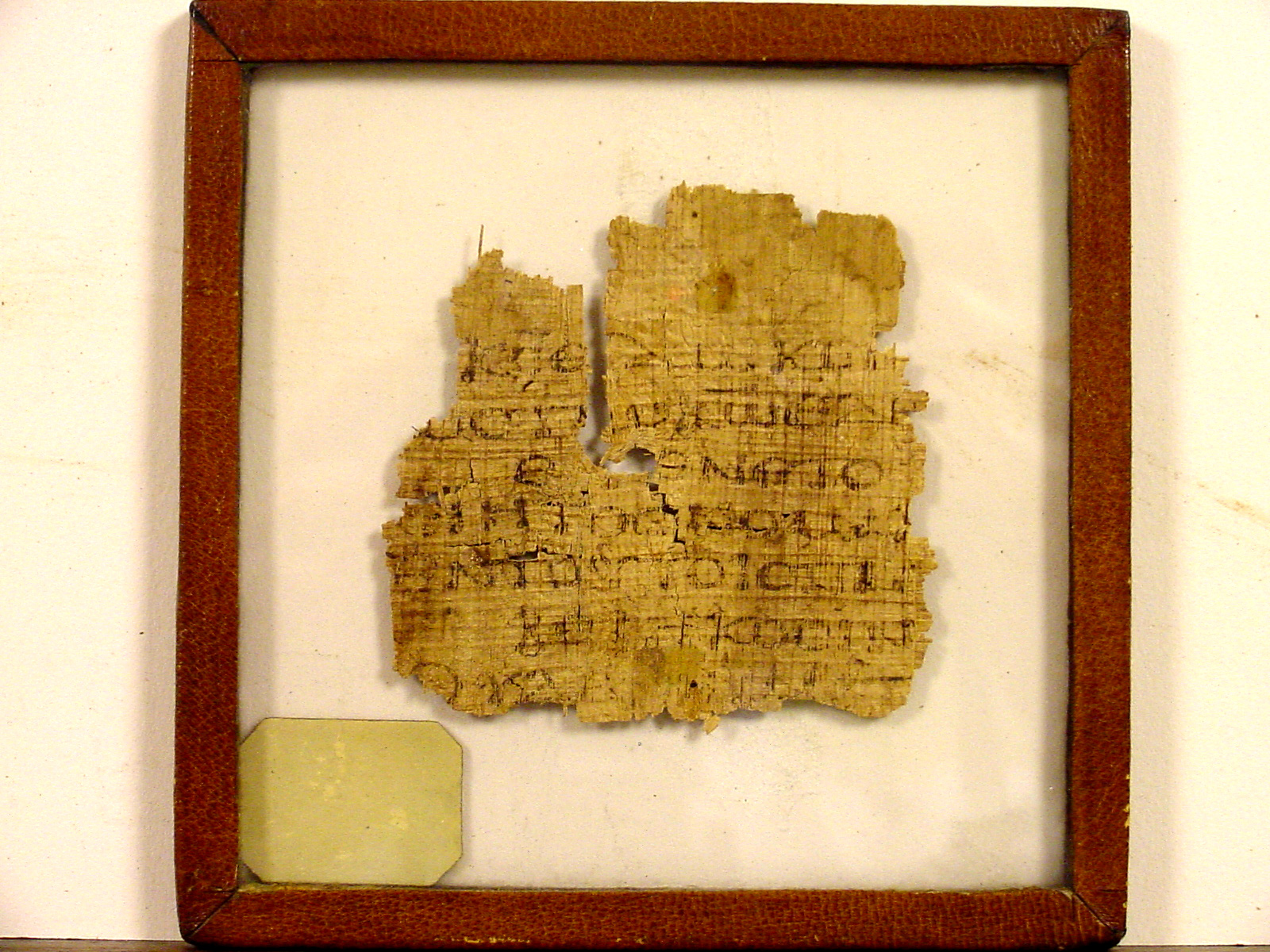
In the collection that I have acquired on eBay, very few pieces appear
to be "literary" in format, although the cartonnage "grab bag" items
might produce some when separation of layers is accomplished. Even the
Homer fragment acquired by another bidder was difficult to classify.
Here are images of another group of fragments that might be "literary," although thus far identification has eluded me.
#1. PPennKraftLit 01 (three
fragments):
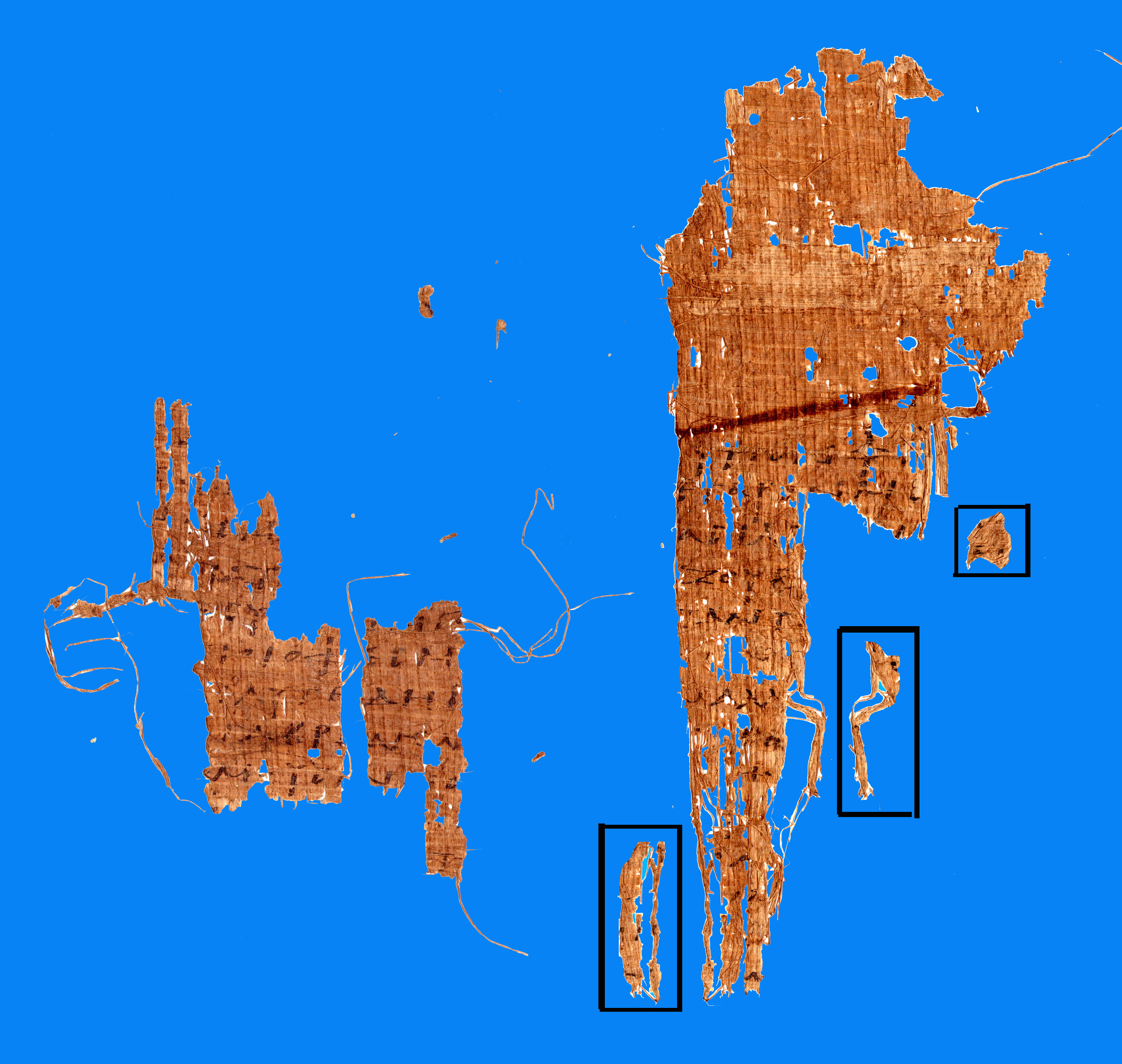
The letters are carefully written along the fibers, separately, and
relatively consistently. The top margin is very large, which might be
considered unusual in a documentary piece. The other side
is blank, although a few traces of ink appear (see the three black
boxes) due to difficulties in separating and flattening the layers. The
layer on top of the large fragment was removed by soaking, to the
detriment of the large piece. (The dark diagonal line above the writing
occurred in the drying process, where two glass plates joined.)
Fragment 1: The top lines of
the large piece promise to be easy to identify --
enough letters are clear -- but thus far remain a mystery. Here they
are close up, from an image (on the left) taken before layer separation
was
undertaken (the overlying layer is moved to the left, although
the letters beneath it are not visible here) and a scan of the results
(on the right):
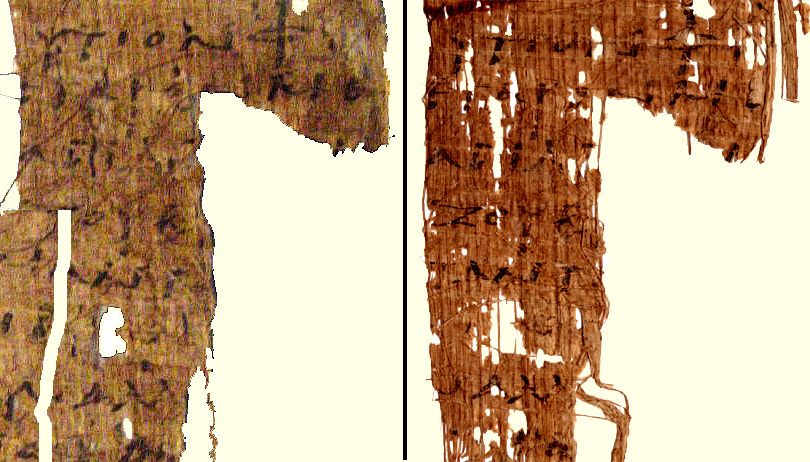
Removal of the upper layer revealed a clear Z in line 4 and perhaps
part of an omega in line 7 but little else. Thus the tentative
transcription is:
1. ]Υ Τ/Γ Ι Ο Ν Φ . [
2. ]Ε/Σ Φ Α Ρ Ε? Ν? Μ Ε/Θ [
3. ]Α Σ Ι Λ/Δ/Α . [
4. ]. Ζ Ο Υ Β? [
5. ] . Δ? Ν? Π? [
6. ] . . . . [
7. ]Ω? Α Λ Λ [
8. ] . .
. . [
Fragments 2 and 3: The smaller
fragments are clearer, but their relationship to each other and/or to
the larger piece is unclear. Examination of the other sides shows that
they almost certainly were not located as in the images here. Perhaps
they were from adjacent layers (rolls) of the original roll,
assuming that they all came from the same roll (as the similarity
in the lettering suggests).
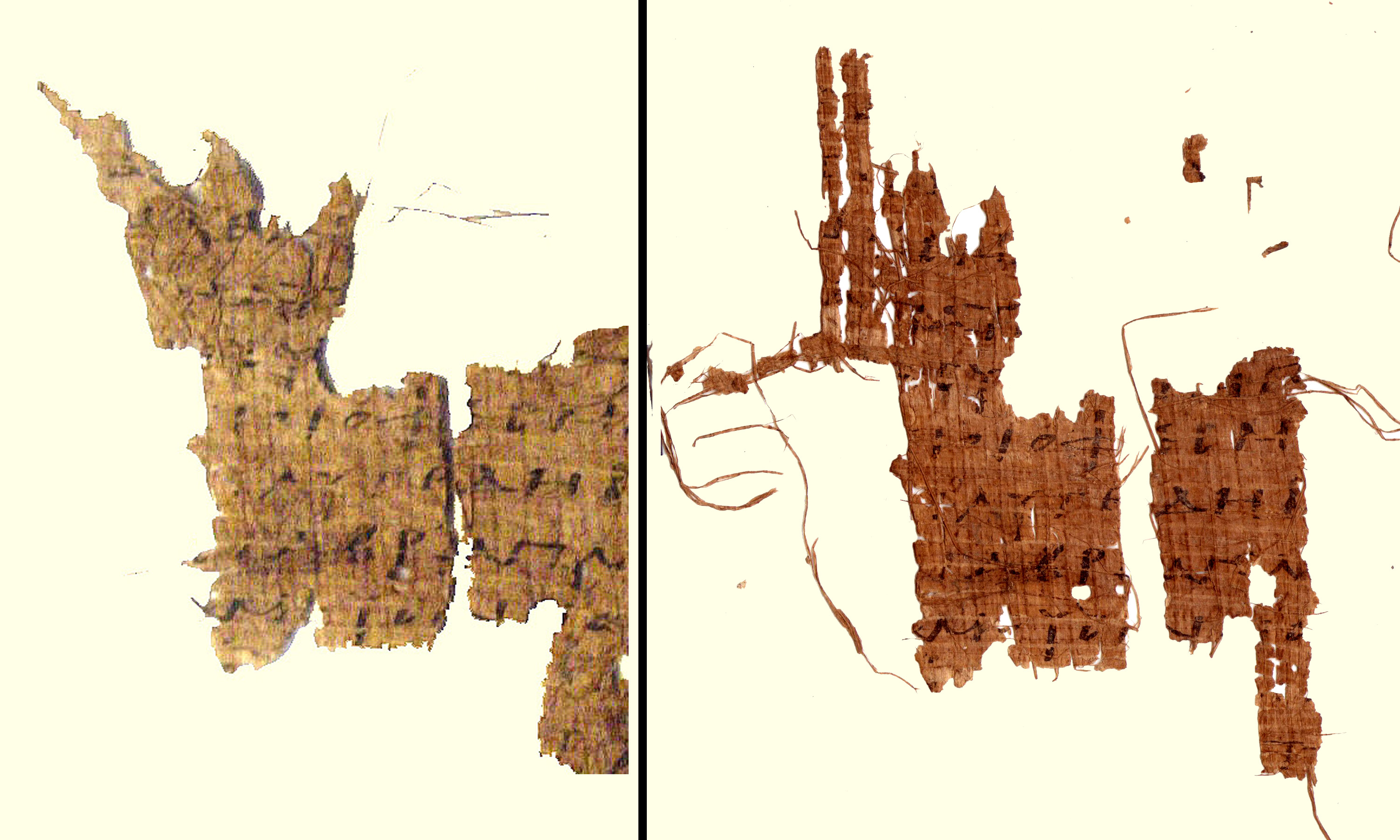
Fragment 2: A tentative
transcription of the left fragment:
5. ] Σ Υ [
6. ] Ι Ο Ι Ο Φ [
7. ] . Λ? Υ Τ Ε/Θ [
8. ] . Α? Β? Ρ . [
9. ] Μ Ε? Υ/Ι Ο? . [
Fragment 3:
And of the right:
1. ] . . Γ [
2. ] Ε Σ Μ [
3. ] Δ Η . [
4. ] Α Π? Ω? [
5. ] Ν? . . [
Suggestions are most welcome!
#2. PPennKraftLit 02 (cart109):
Among the cartonnage purchases was one piece with neat uncial lettering
that yielded parts of two clear lines after removal of some surface
fibers by means of simple humidification. It may be from a
mathematical, astronomical, or chronographic treatise of some sort, but
thus far no identification has been made:
1. ] . ΗΚΟΝΤΑ ΟΚΤΩ . . [
2. ] . ΤΩ ΤΡΙΤΟΝ (apparently blank)[
3, ] ΤΩ . . . . . [
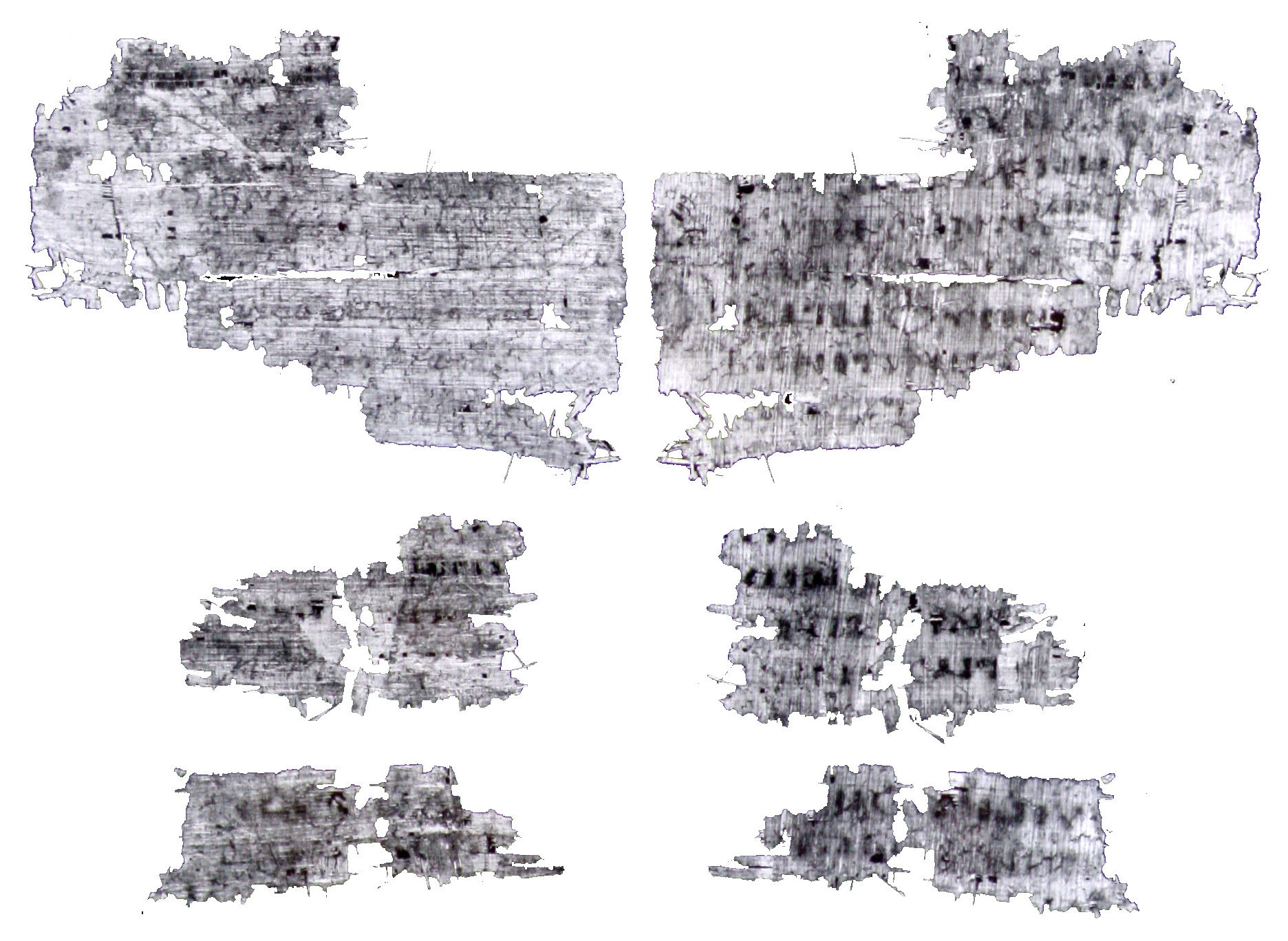
#3. PAmh 2.196
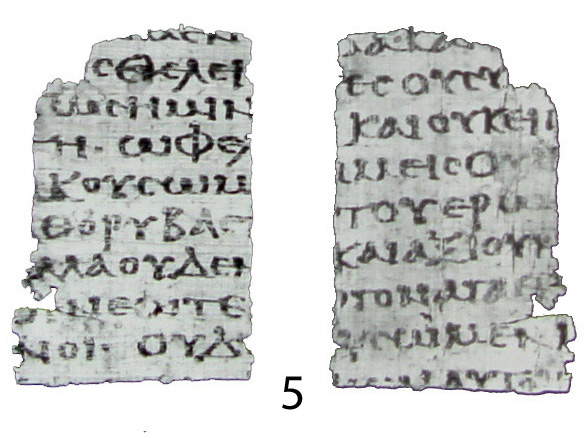
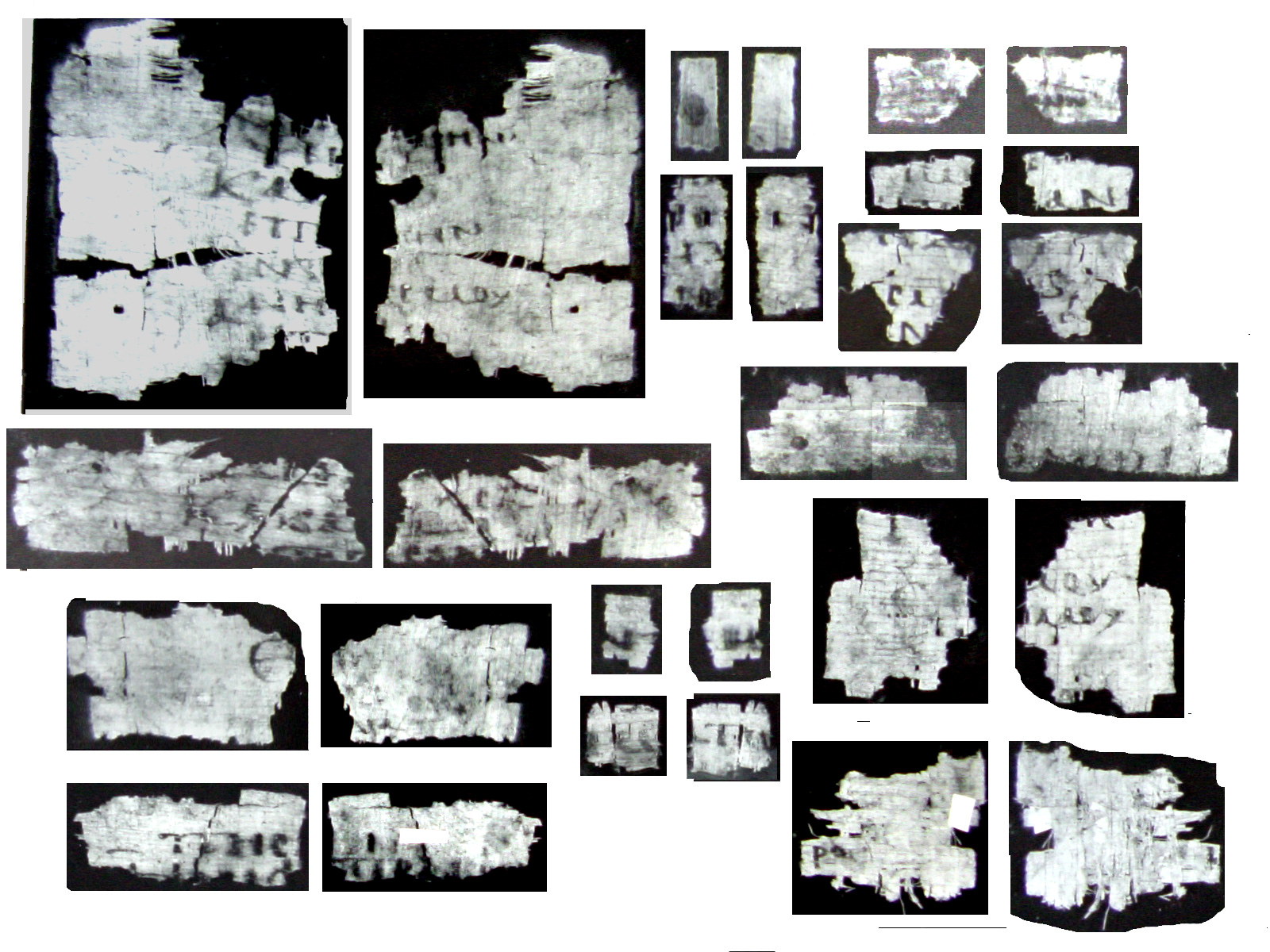
Here are several fragments that seemed to the original editors (Grenfell & Hunt) to come from the same codex. They think it must be a "theological work" of some sort. It should be relatively easy to transcribe so let's start with the clearest and longest fragment, which I've numbered "5" -- found on the image two thirds of the way down, in the middle area (with fibers, then against fibers). Here is what I think I see on the -- side::
| |
with the fibers -- |
|
against the fibers || |
| 01 |
. . . . ] . Μ Ε Ν [ |
01 |
](M)A KA[ |
| 02 |
. . ] Σ Θ Ε Λ Ε (Η/Ν)[ |
02 |
]ES OUSU[ |
| 03 |
](Τ) Ω Σ Η Μ Ι Ν [ |
03 |
]KAIOUKEI.[ |
| 04 |
](Τ) Η · Ω Φ Ε Λ[ |
04 |
](M)MEISOU..[ |
| 05 |
](Α) Κ Ο Υ Σ Ω Μ [ |
05 |
]TOUERW[ |
| 06 |
] Θ Ο Ρ Υ Β Α S (Τ) [ |
06 |
]KAIACIOU.[ |
| 07 |
] Λ Λ Α Ο Υ Δ Ε (Μ)[ |
07 |
](R)TONATAQ[ |
| 08 |
] . . Ν Ε W[?] Τ Ε [ |
08 |
].SWMEN[ |
| 09 |
]Ν Ο Ι · Ο Υ Δ .[ |
09 |
]. . . . AYT . .[ |
Now lets try a TLG search on line 6 of the -- side, which seems hopefully unusual. If we enter only the QORUBA part, we are unlikely to meet a word division. That produces 23 hits, of which several have the next letter as Z, which looks unlikely here. Others have D, G, C or P , all of which seem improbable (or impossible). None are followed by E, but several by S, so perhaps that is what we ought to be reading at the end of the line, with a damaged horizontal fiber that makes it look like an E. Those reading S are followed by another S, W or T. Since T is a possible reading in our fragment, let's look more closely at that one hit:
Hippolytus Scr. Eccl., Refutatio omnium haeresium. {2115.060} Book 4 chapter 25 section 2 line 2. (Browse)
(2.) MOU\S A)POLL<U/>OUSIN. OI( AU)TOI\ FU/SEWS: SIGHROI/, AI)SXUNTHROI/, SUNH/QEIS, MOIXOI/, SKNIFOI/, PRA/GMASI PONOU/MENOI, QORUBASTAI/, KAQA/RIOI, EU)FUEI=S, KALOI/. [O)FRU/SI MEGA/LAIS] POLLA/KIS E)N LEPTOI=S PRA/GMASI GENNW=NTAI, KAI\
Having isolated our search term (in red), let's see if anything else in the context fits our fragment:
No, unfortunately, nothing. Perhaps we need more context, but that is unlikely in a literary work, where lines seldom exceed about 35 letters (slightly shorter than these TLG lines). Perhaps it reflects another version of Hippolytus' Refutation, since that work has a rather complex textual history. Can we tell anything from what we have deciphered on the surrounding lines? We seem to have stepped into the middle of descriptive terms, mostly uncomplimentary. The online translation of this section of Hippolytus reads:
Those born in Aquarius will be of the following description: square in size, of a diminutive body; sharp, small, fierce eyes; imperious, ungenial, severe, readily making acquisitions, for friendship and fellowship well disposed; moreover, for maritime enterprises they make voyages, and perish. The same by nature are taciturn, modest, sociable, adulterers, penurious, practised in business,
tumultuous, pure, well-disposed, honourable, large eyebrows; frequently they are born in the midst of trifling events, but (in after life) follow a different pursuit; though they may have shown kindness to any one, still no one returns them thanks.
So it has horoscopic connections there. Do we have any hint of that in our fragment? Beginning in our line 4, we seem to have a new section (after the explicit punctuation) beginning with an "ought" idea -- probably "we ought" (in a warning?) or perhaps "they ought." In line 5, probably "we hear/obey" something or other. In line 7, "but neither," which begins to sound like warning against certain actions or attitudes. Line 2 could be made to support such a reconstruction, with its probable reference to "willing" and line 3 "to us." So we might be in the middle of some sort of sermonic exhortation about life conduct -- not at all unusual for Jewish and/or Christian literature in the period from which this material probably comes (6-7th century).
The other side (||) also has some fairly clear sequences of letters.Using the "advanced" search feature of TLG, let's try to find lines 5-6, using TOU ERW and KAI ACIOU. No results were found. So let's try lines 6 and 7. Nothing there, either. Probably we have a piece of something that is not in the TLG bank. This side of the fragment is less revealing than the other -- line 6 speaks of worthiness, line 3 may be exhortational (don't do something any longer), and line 8 may confirm that "we" are involved. What else? It still sounds sermonic, but identification on the basis of such fragmentary evidence will be difficult, if we try to explore sources not preserved in Greek.
Now look at the other fragments, and see if they make any sense in such a context. And while you are at it, see whether you think that all the fragments on this page actually come from the same scribal hand. Why or why not?
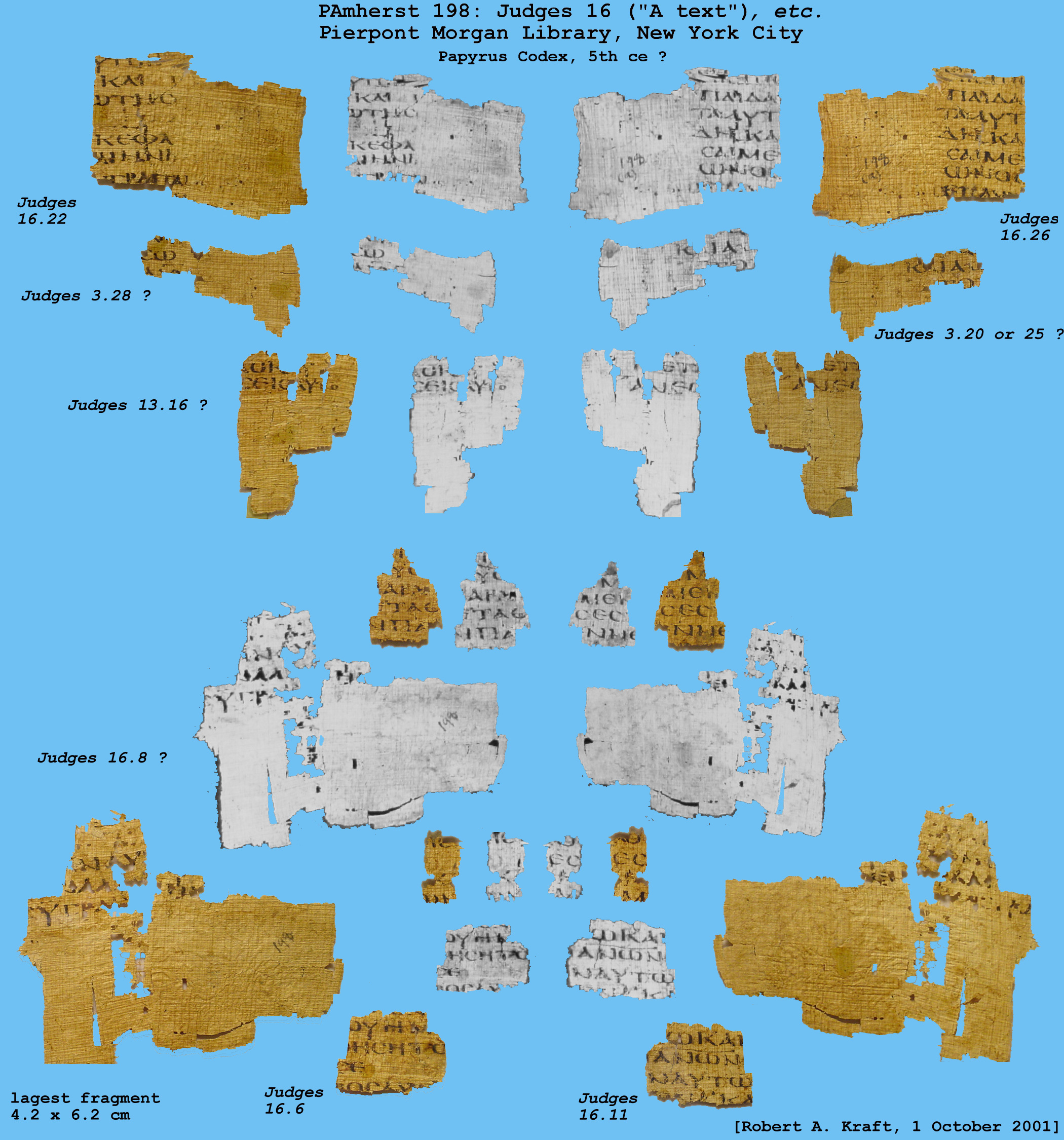
PAmh 198 turned out to be a variant form of Judges (the "A" text)
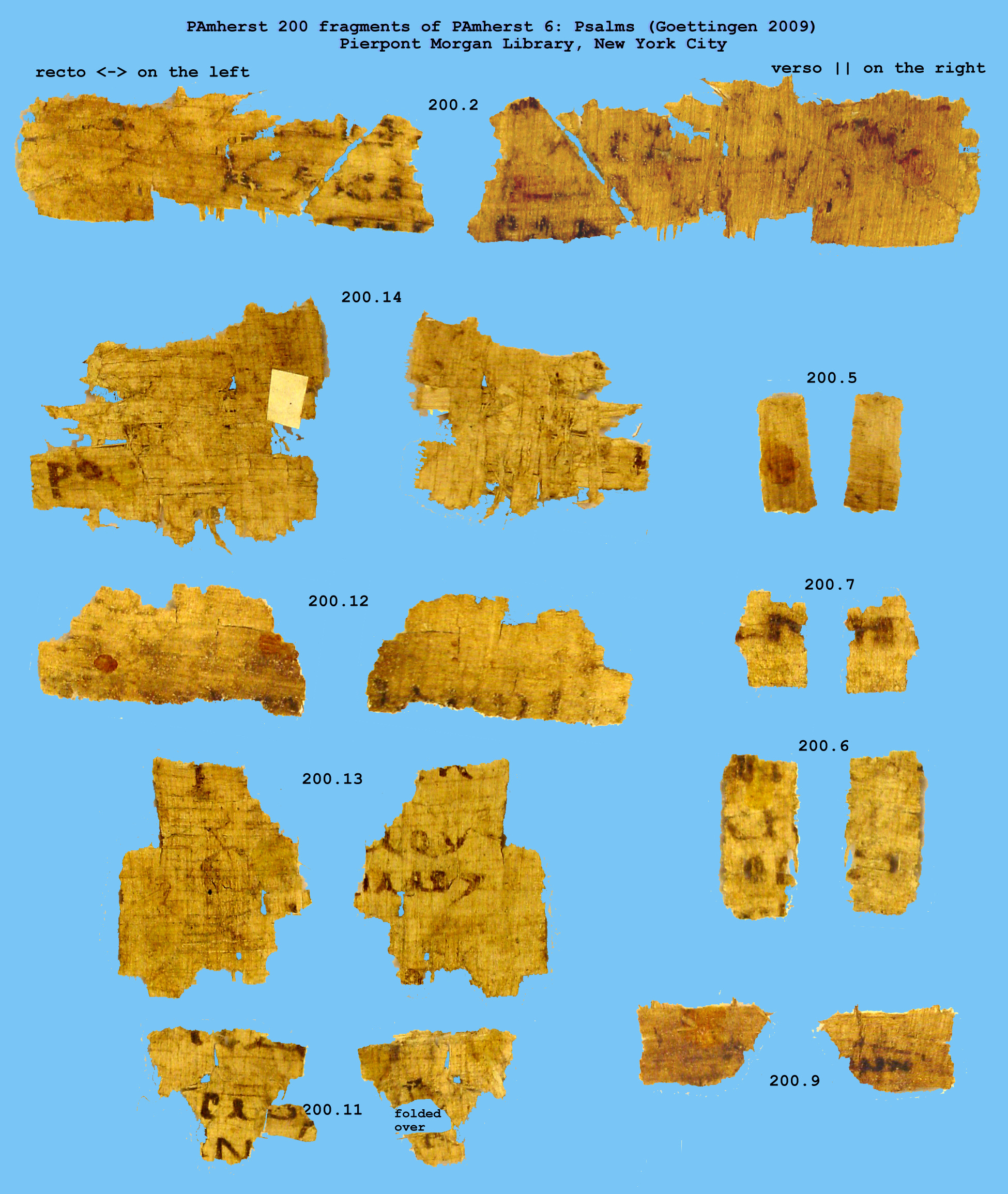
PAmh 200a is from the Psalms, and on that same plate other fragments seem to be as well (joined to PAmh 6)
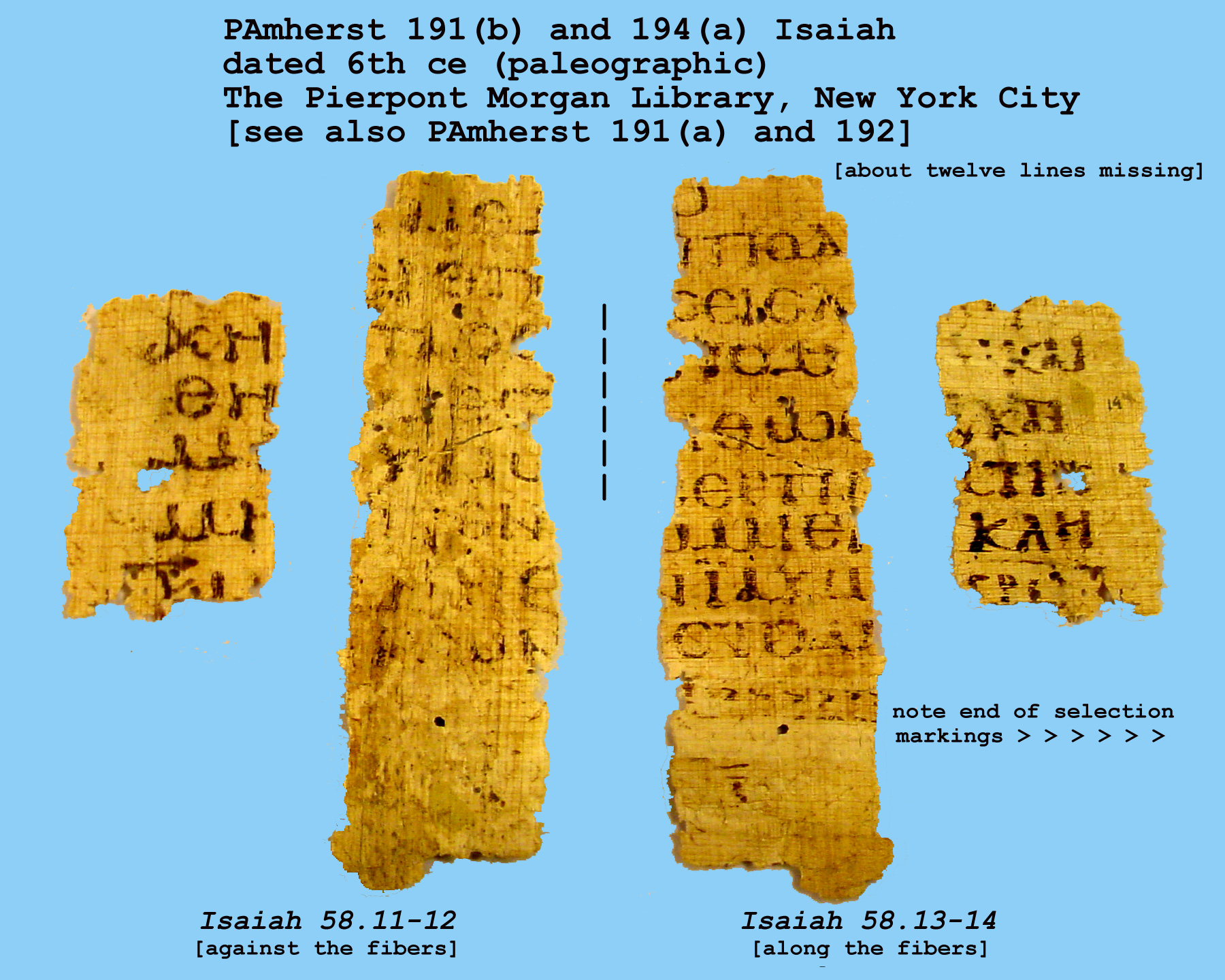
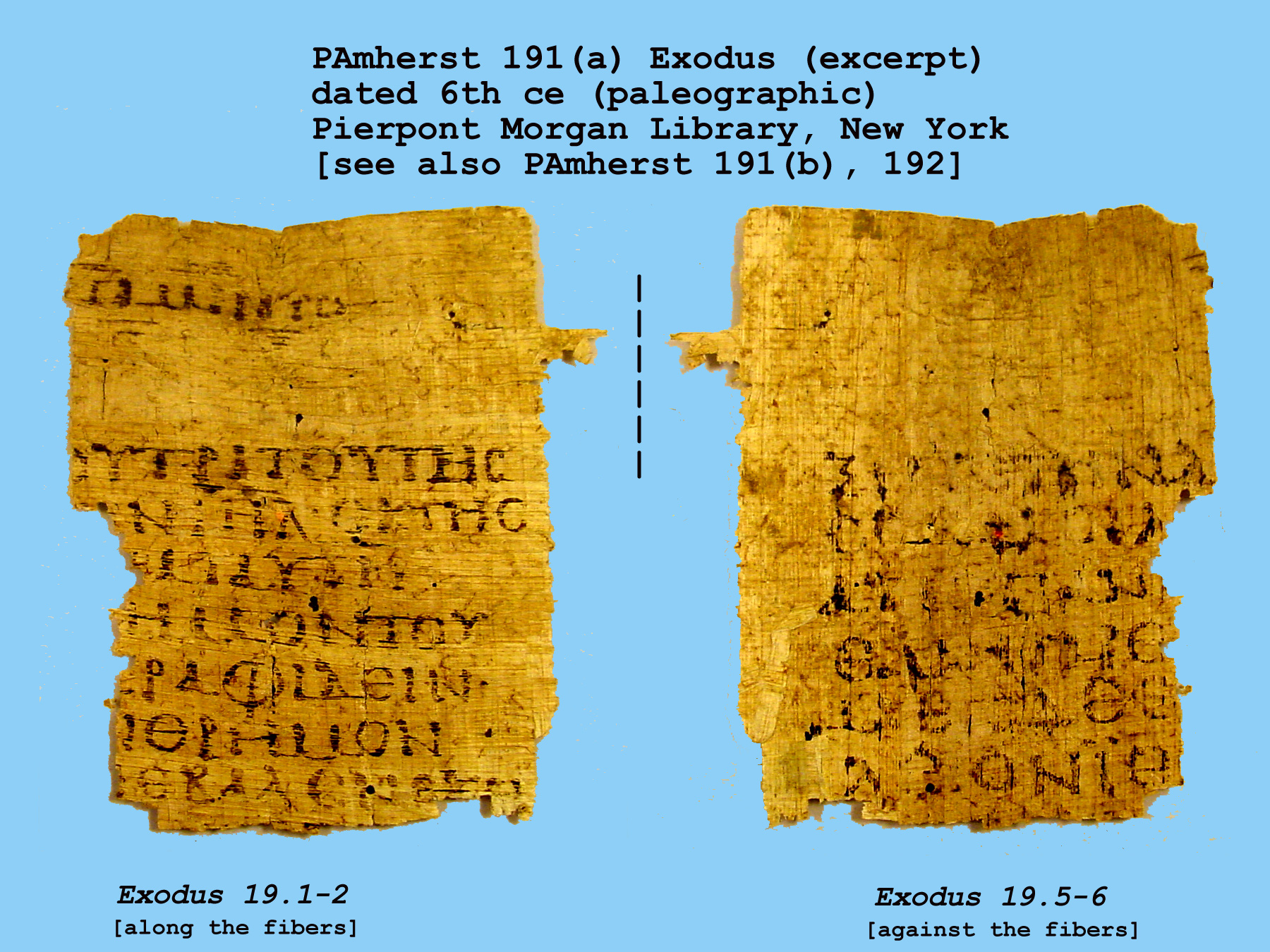
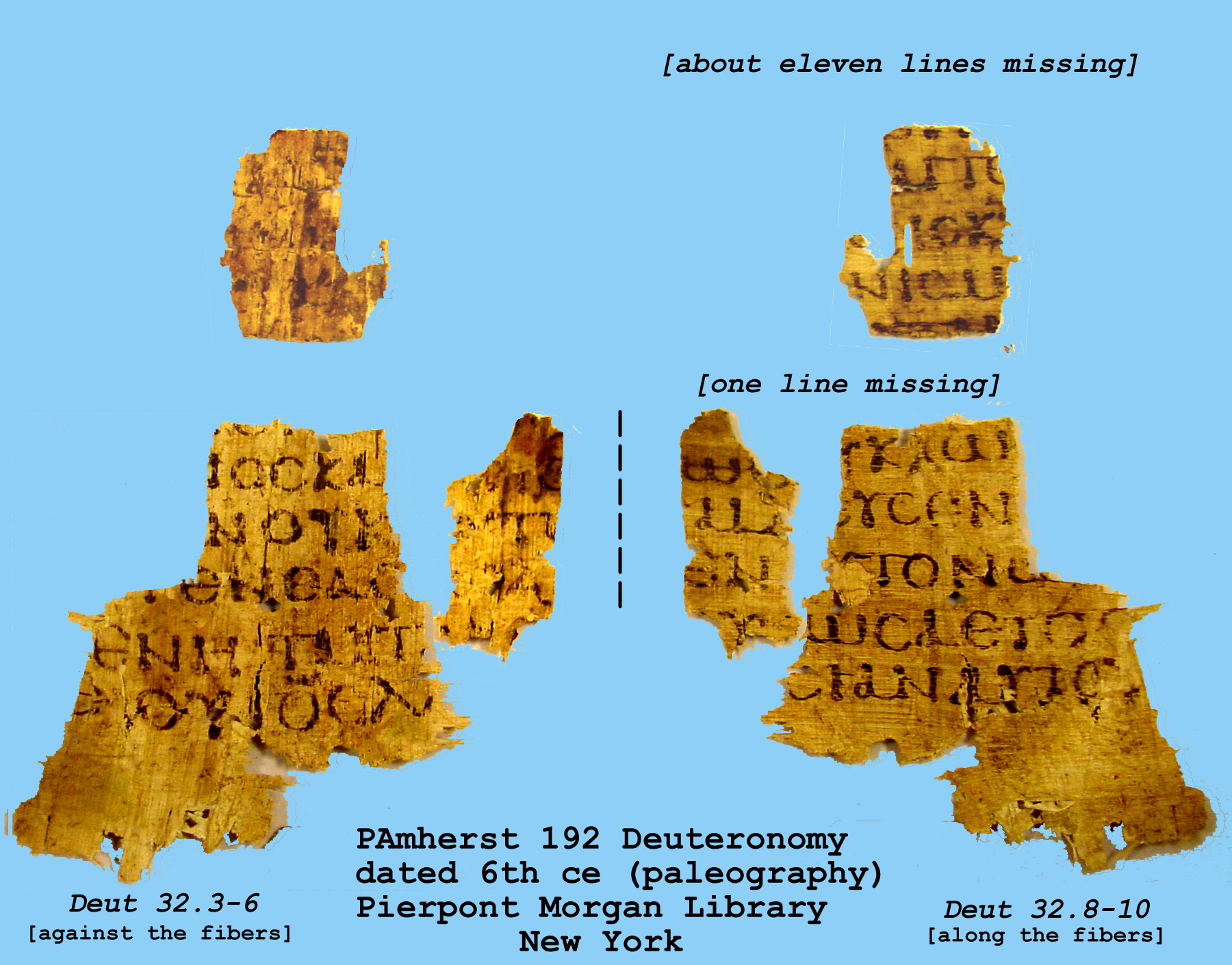
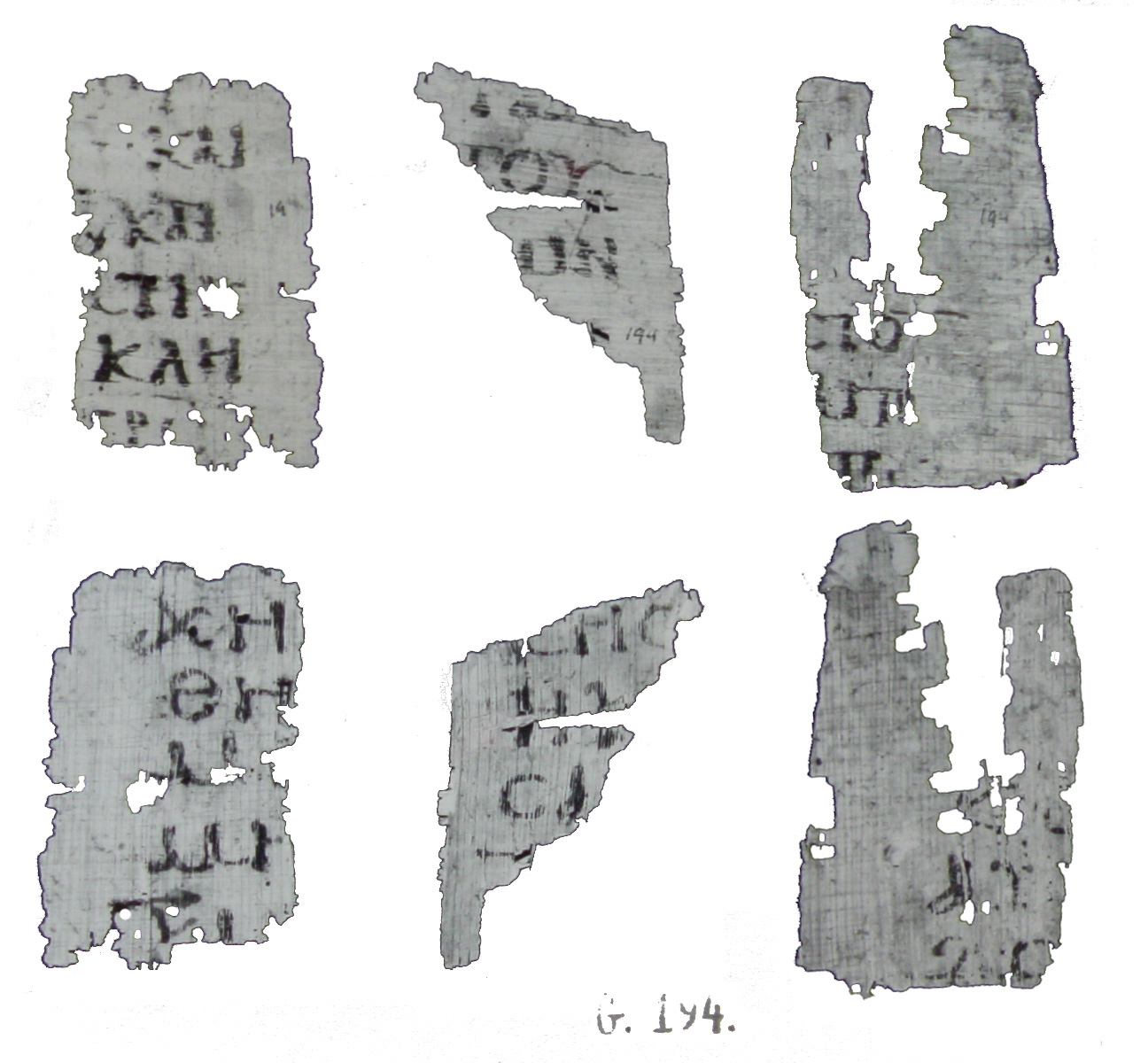
PAmh 191b and 194a are from the same page, perhaps containing excerpts from Jewish scriptures if PAmh 191b and PAmh 192 are also from that codex
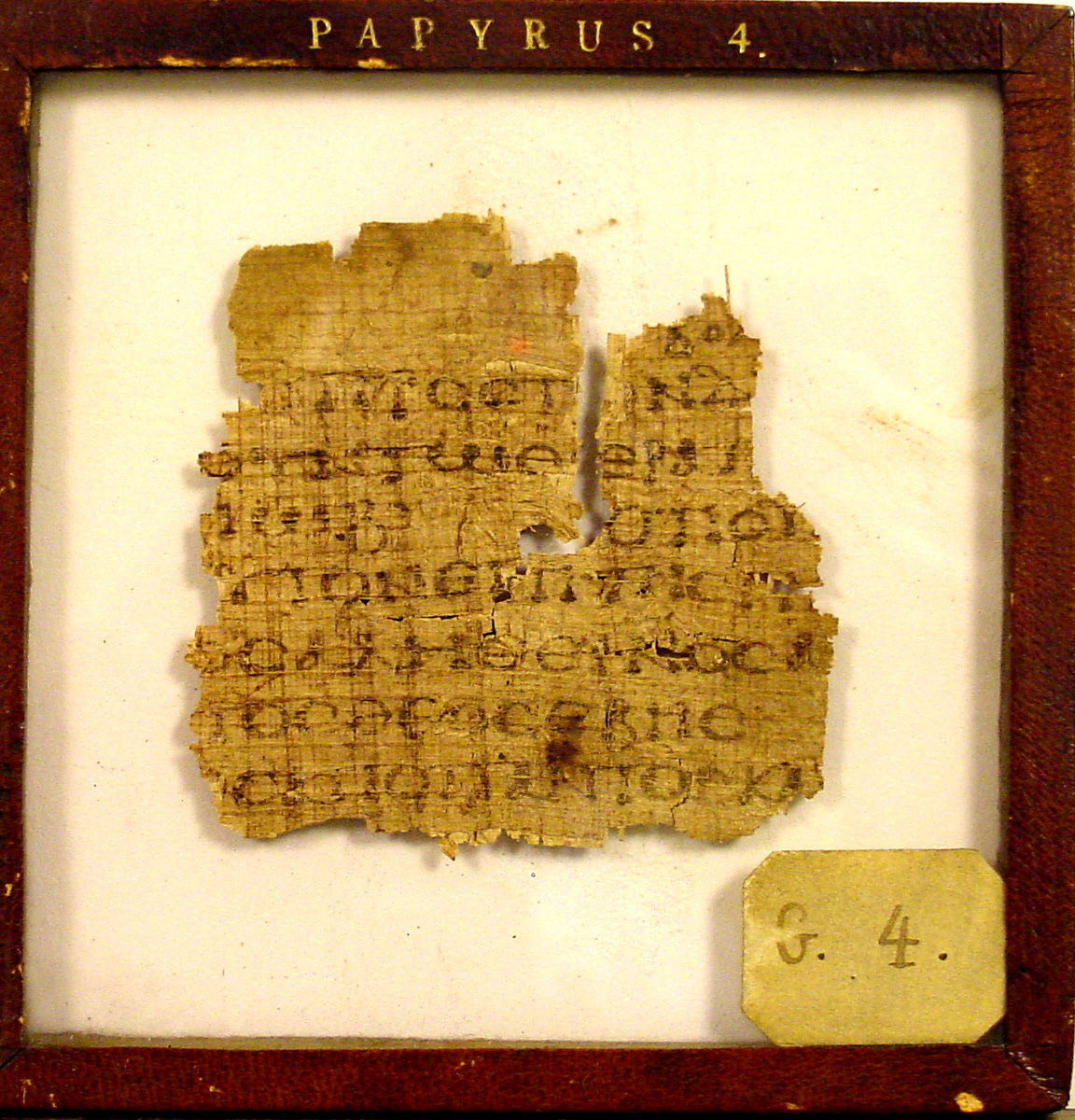
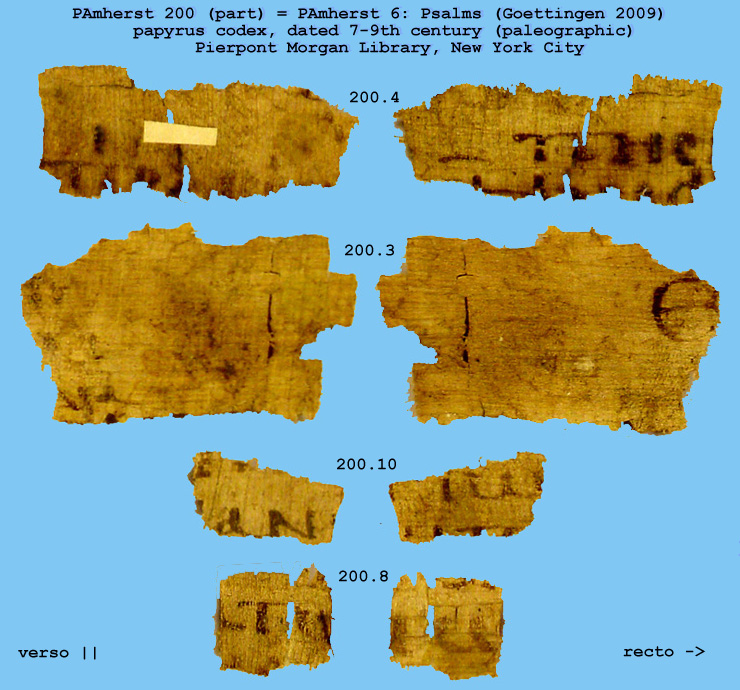
PAmh 201.4 and .8 from Job, probably the same codex as PAmh 4 (both sides)
This leaves the following as yet unidentified:
PAmh 194 (b and c)
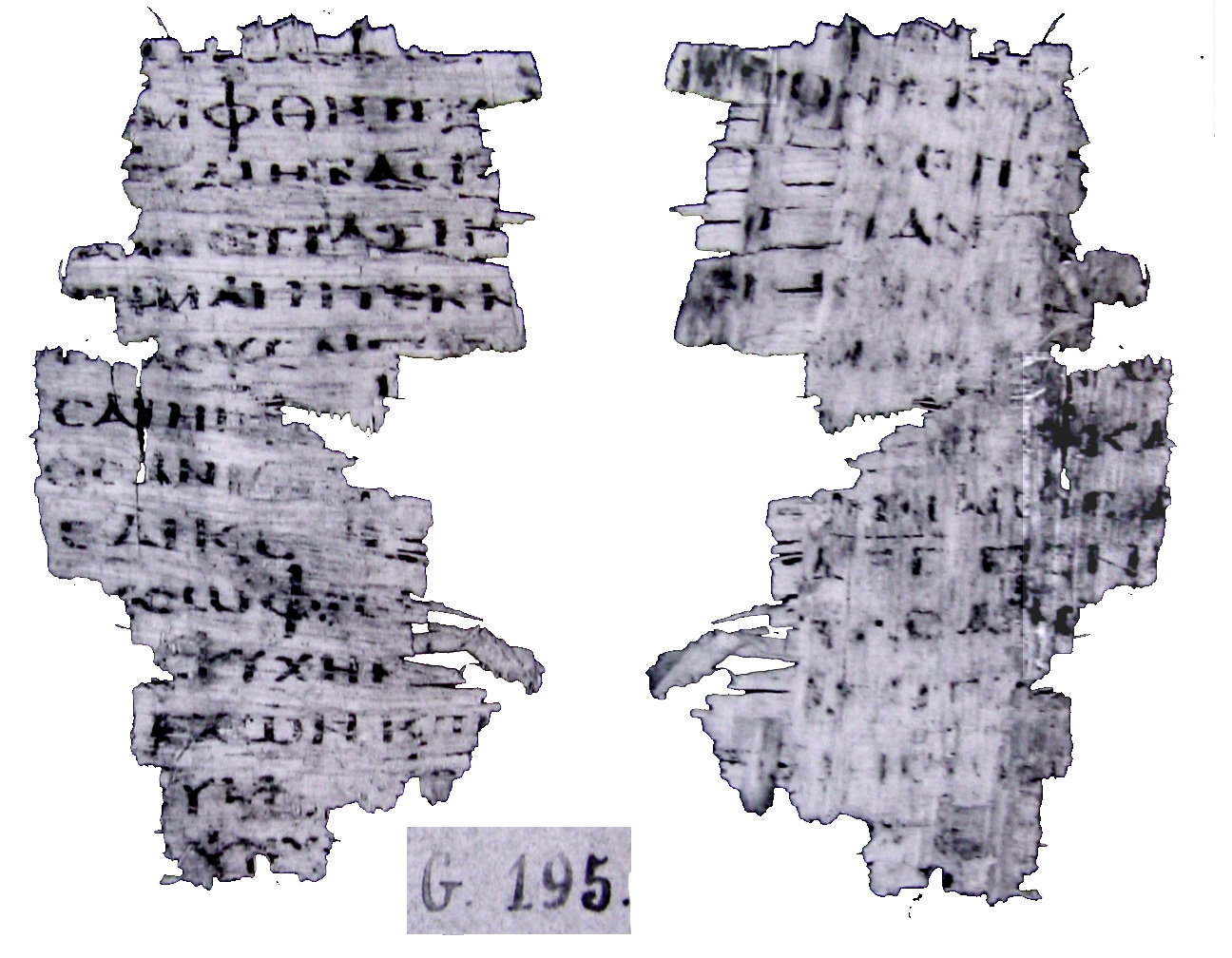
PAmh 195
PAmh 196 (from different hands?)
PAmh 199
PAmh 201 (except for two fragments of Job that resemble PAmh 4 (both sides)
[to be continued]


.JPG)